
Independent data report. Published July 2026 by Claire Ashworth, updated 7 September 2026. Free to cite with a link to this page.
Is a stairlift cheaper than a care home?
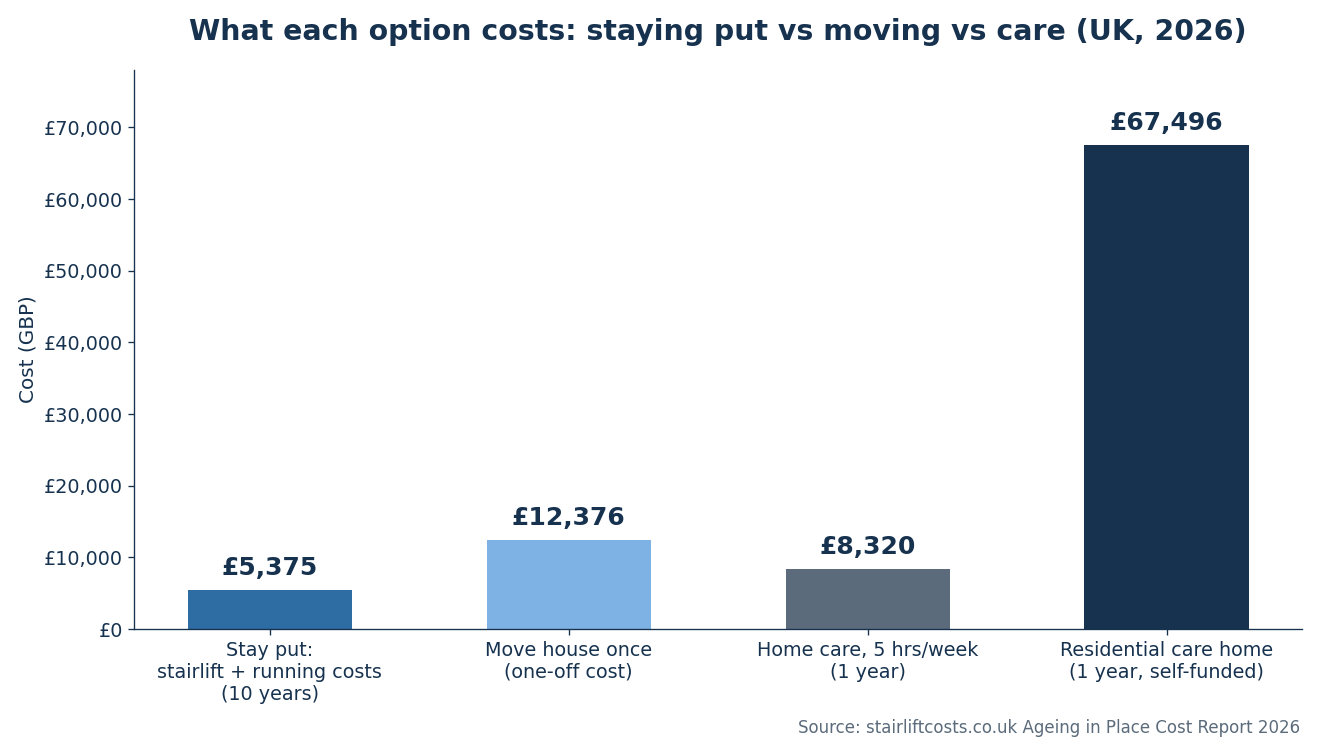
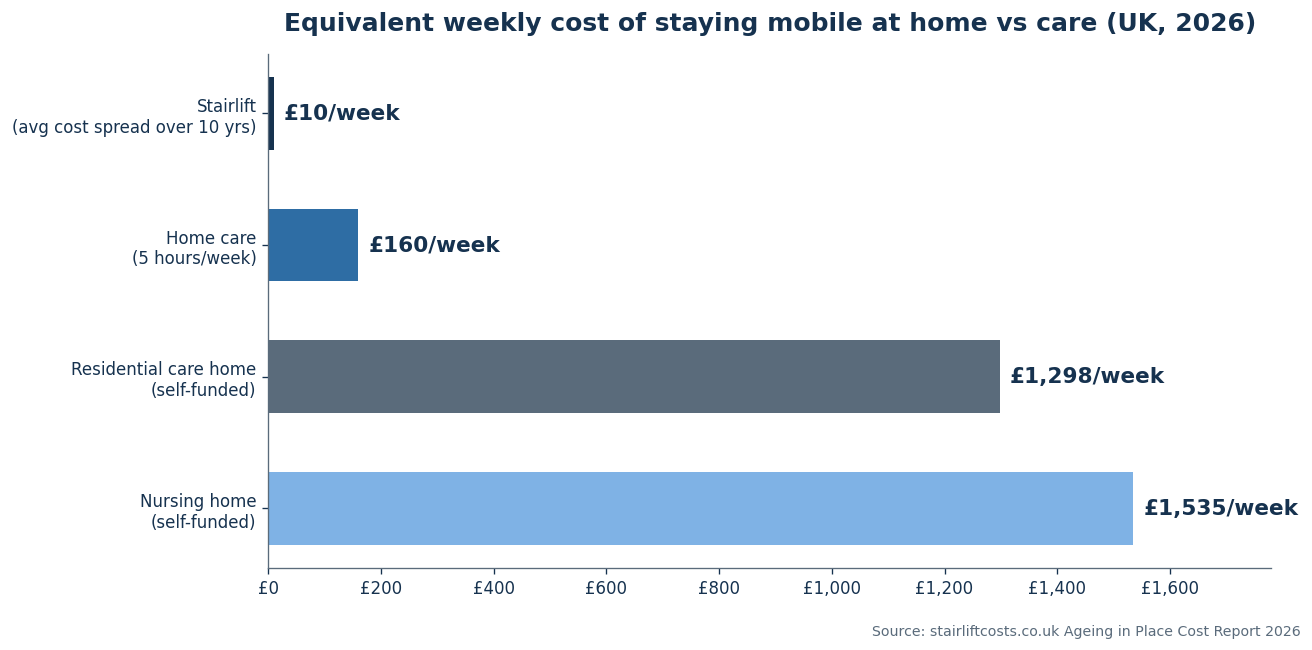
Staying in your own home with a new stairlift costs about £5,375 over ten years, roughly £10 a week. A self-funded residential care home costs £1,298 a week, more than 125 times as much.
Answer checked 7 September 2026. The stairlift figure starts from the £2,800 median of 73 prices published for new stairlifts (17 brands, captured 20 August 2026, full dataset) and adds £235 a year running costs plus £225 removal. The care home figure is the carehome.co.uk self-funder average, checked the same day.
Every year thousands of UK families face the same decision: adapt the home, move somewhere more manageable, or accept that a care home is coming. Almost nobody is shown the numbers side by side before choosing. This report puts the 2026 figures for all three routes in one place, from a new stairlift at about £10 a week over ten years to a self-funded care home at £1,298 a week.
Key findings (UK, 2026)
- Staying put with a new stairlift costs about £5,375 over ten years, roughly £10 a week. That starts from the £2,800 median published price of a new stairlift and adds servicing, repairs, batteries, electricity and eventual removal.
- Moving house once costs an average of £12,376 in fees alone, more than double the ten-year cost of a stairlift, before any difference in house price.
- One year of self-funded residential care costs an average of £67,496. A nursing home averages £79,820 a year.
- Five hours of home care a week costs about £8,320 a year, still around 55% more per year than a stairlift costs per decade.
- A Disabled Facilities Grant of up to £30,000 in England (£36,000 in Wales, £35,000 in Northern Ireland) can reduce the stairlift cost to zero for eligible households.
- 24% of over-55s who considered moving put their plans on hold because of the cost of moving itself.
The headline comparison
The table below compares what each route actually costs. The options are not interchangeable, a care home provides care and a stairlift does not, but for the large group of people whose main barrier to staying home is the stairs, this is the financial choice in front of them.
| Option | What it costs (2026) | Equivalent per week |
|---|---|---|
| Stay put with a new stairlift | £5,375 over 10 years (purchase, running costs, removal) | £10 |
| Move house once | £12,376 one-off (stamp duty, agent fees, conveyancing, removals) | £24 spread over 10 years |
| Home care, 5 hours a week | £8,320 a year at the £32/hour UK average | £160 |
| Residential care home (self-funded) | £67,496 a year | £1,298 |
| Nursing home (self-funded) | £79,820 a year | £1,535 |
Route 1: stay put and adapt (£5,375 over ten years)
Our UK price tracker puts the median published price of a new stairlift at £2,800, from 73 prices across 17 brands captured on 20 August 2026 (straight lifts £1,995, curved £4,395). Our running costs report adds £235 a year for servicing, repairs, batteries and electricity, plus about £225 to remove the lift at the end of its life. Over ten years that comes to £5,375, about £10 a week. The £3,867 figure quoted elsewhere measures something different: it is the average of what buyers told a Which? member survey they had paid, with fieldwork dating back to 2022, while the £2,800 median comes from the prices sellers publish today.
Two things can cut this further. VAT relief takes 20% off for anyone with a chronic condition or disability (see who qualifies), and the means-tested Disabled Facilities Grant can cover the entire cost, up to £30,000 in England, £36,000 in Wales and £35,000 in Northern Ireland.
Route 2: move house (£12,376 before you buy anything)
Industry estimates put the average cost of buying and selling a home in 2026 at £11,733 to £13,018 once stamp duty, estate agent fees, conveyancing, surveys and removals are counted. We use £12,376, the midpoint. Downsizing to a £400,000 property carries a £10,000 stamp duty bill on its own.
The cost is not hypothetical friction: 18% of potential downsizers name stamp duty as the reason they did not move, and 24% of over-55s who considered moving put plans on hold because of moving costs. Moving can still be the right call where a home cannot be adapted, but as a way to deal with stairs it costs more than twice as much as a decade of stairlift ownership.
Route 3: care at home or a care home (£8,320 to £79,820 a year)
Domiciliary care averages £32 an hour in 2026, so a modest five hours a week costs £8,320 a year. Self-funded residential care averages £1,298 a week (£67,496 a year) and nursing care £1,535 a week (£79,820 a year), with London well above both figures.
Care homes exist because some people need round-the-clock care, and no stairlift replaces that. The financial point is narrower: for people at risk of moving into care primarily because they can no longer manage the stairs, a £5,375 ten-year adaptation postpones a £67,496-a-year cost. Even bringing in paid home care alongside a stairlift leaves most households tens of thousands of pounds a year better off than residential care.
The tipping point: when does each route make sense?
- Stairs are the main problem, health is otherwise stable: adapting is by far the cheapest route. A stairlift pays for itself against home care in about eight months, and against a care home in under a month.
- The house is unsuitable beyond the stairs (bathroom upstairs only, unmanageable garden, isolation): moving may be worth the £12,376, ideally to a home that will not need adapting later.
- Personal care needs are daily and increasing: paid home care plus adaptations usually still beats residential care on cost until needs exceed roughly 28 hours of care a week, the point where £32/hour home care overtakes the average residential fee.
Methodology and sources
All figures are UK averages. Stairlift purchase price: the median of 73 prices published for new stairlifts across 17 brands, from our UK Stairlift Price Tracker, captured 20 August 2026. Running costs and removal: our Stairlift Running Costs Report 2026 (£235 a year typical, £225 removal). Care home fees: carehome.co.uk self-funder averages (£1,298/week residential, £1,535/week nursing), re-checked 7 September 2026; the equivalent Lottie figures sit within £40 of both. Home care: homecare.co.uk puts UK home care at £26 to £38 an hour (checked September 2026); we use £32, the midpoint, and the Homecare Association minimum sustainable rate is £34.42. Moving costs: HomeOwners Alliance and Compare My Move 2026 estimates (£11,733 to £13,018), compiled June 2026. Downsizing statistics: HomeOwners Alliance downsizing research. Grant caps: the governing legislation for each nation, summarised in our grants guide. Stairlift Costs is an independent guide operated by Whito Ltd and does not sell stairlifts.
Download the data: ageing-in-place-cost-data-2026.csv (free to reuse with attribution).
How to cite this report
Journalists, charities and councils are welcome to reuse any figure or chart from this page. Please credit “Stairlift Costs Ageing in Place Report 2026” with a link to this page. For comment or regional breakdowns, contact us via the contact page.
Frequently asked questions
Is it cheaper to adapt a home or move?
Adapting is usually far cheaper. A new stairlift costs about £5,375 over ten years, while the fees involved in moving average £12,376 before any difference in property price.
How much does a care home cost compared with staying at home?
A self-funded residential care home averages £67,496 a year in 2026. Staying at home with a stairlift costs about £540 a year averaged over ten years, and adding five hours a week of home care brings the total to roughly £8,860 a year.
Can a grant cover the cost of staying in my home?
Yes. The means-tested Disabled Facilities Grant covers adaptations including stairlifts, up to £30,000 in England, £36,000 in Wales and £35,000 in Northern Ireland. Scotland runs an equivalent scheme through local councils.
When does home care become more expensive than a care home?
At the 2026 UK average of £32 an hour, home care overtakes the average residential care fee at roughly 28 hours a week. Below that, staying at home is normally the cheaper option.
For the ongoing costs behind the stay-put figure, see our companion Stairlift Running Costs Report 2026.