Independent buying guide. Last updated June 2026 by Claire Ashworth.
The price on the quote is not the price of owning a stairlift. It is the price of getting one fitted. What you actually spend over the years that follow includes servicing, batteries, the odd repair, electricity, and one day removal, and almost no salesperson volunteers those numbers up front. This guide adds them all up, gives you a realistic five and ten-year total, and shows you where the ongoing costs are genuinely worth paying and where they are not.
Key takeaways
- A new straight stairlift costs about £5,075 to own over ten years, roughly £42 a month.
- The purchase price is about half of the lifetime cost; the rest is servicing, batteries, repairs and removal.
- An annual service is £100 to £200; batteries are £50 to £120 every three to five years; electricity is about £12 a year.
- An out-of-warranty callout is typically £75 to £200 before parts, which is why a cover plan can be worth it on an older lift.
- Straight lifts hold modest resale value; curved lifts have almost none, because the rail is bespoke.
- Biggest savings: buy the right type once, remove VAT if eligible, and consider a reconditioned lift for straight stairs.
The headline: what a stairlift really costs over 10 years
For a typical new straight stairlift, here is the honest lifetime picture in 2026 UK prices. Curved lifts cost more to buy but the running costs are broadly the same.
| Cost | Typical 2026 figure | Over 10 years |
|---|---|---|
| Buy and fit (new straight) | £1,500 to £3,500 once | £1,500 to £3,500 |
| Annual service | £100 to £200 a year | £1,000 to £2,000 |
| Battery replacement | £50 to £120 every 3 to 5 years | £100 to £360 |
| Electricity | About £12 a year | About £120 |
| Out-of-warranty repairs | Callout £75 to £200 plus parts | £0 to £800, about £480 budgeted |
| Removal at end of life | £150 to £300 | £150 to £300 |
Last verified: August 2026
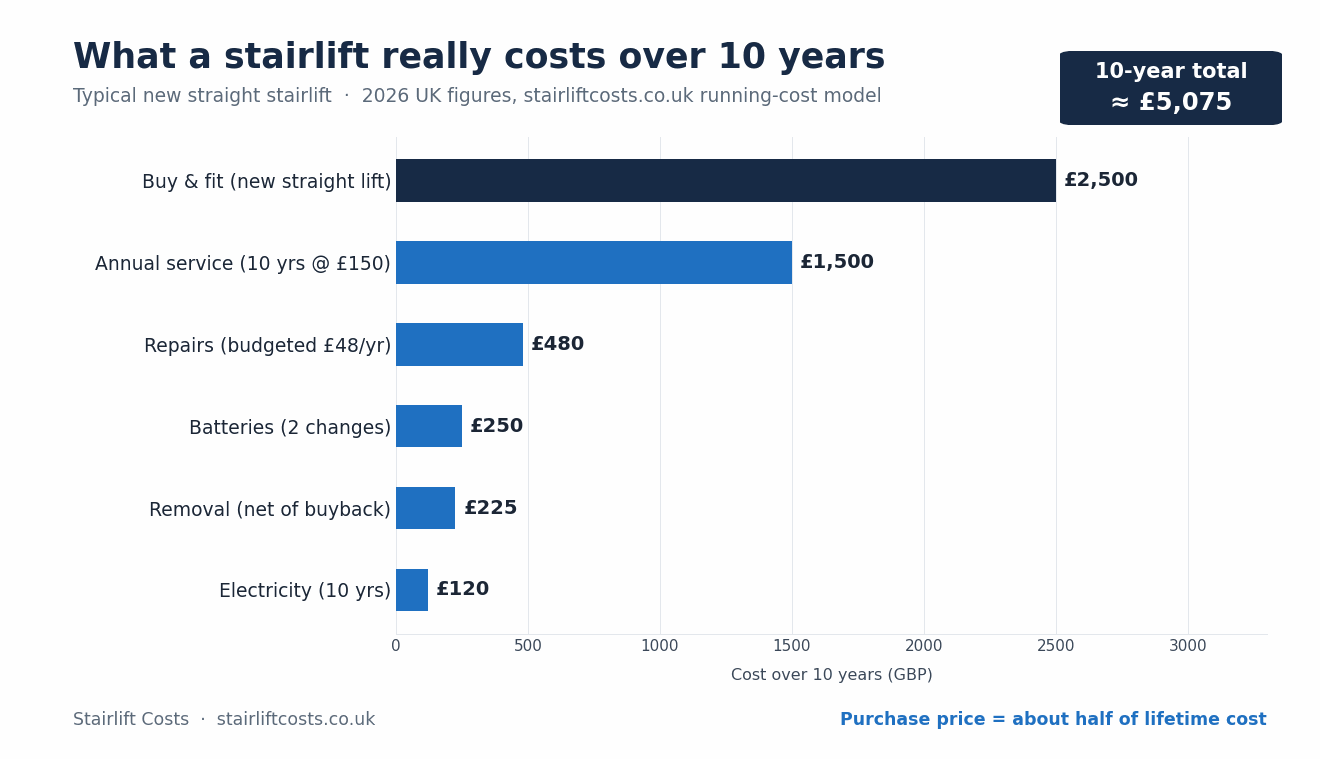
Add it up and a new straight stairlift typically costs somewhere between £2,900 and £7,000 to own over ten years, with the purchase price making up about half of that. The single biggest lever on the total is not the lift you choose; it is how you handle servicing and cover, which is decision number one below.
If you want to know what that purchase price is itself made of, our breakdown of a stairlift price works through it part by part, using published prices.
Cost 1: Servicing, and whether to take a cover plan
A stairlift should be serviced once a year to stay safe and reliable. A one-off independent service usually costs £100 to £200. The decision most owners face after the first year is whether to pay per service or take an annual cover plan (an extended warranty or service agreement).
A cover plan bundles the annual service with breakdown cover, priority callouts and, on the better plans, all parts and batteries. It typically costs a few hundred pounds a year. Whether it is worth it comes down to two things: the age of the lift and your appetite for surprise bills.
- Take the plan if the lift is older, used heavily, is a curved or premium model where parts are dear, or if a single unexpected repair bill would be a real problem. An out-of-warranty callout alone is typically £75 to £200 before any parts.
- Pay per service if the lift is newish, lightly used, straight, and you have a contingency fund. Over a few years, paying for the annual service and the occasional repair often costs less than a full cover plan.
Whichever you choose, get the terms in writing: what the callout fee is, whether parts and batteries are included, and how fast they attend. For the trade-off between the manufacturer’s own plan and an independent firm, see manufacturer versus independent servicing.
Cost 2: Batteries, the cost everyone forgets
Stairlifts run on rechargeable batteries so they keep working in a power cut, and those batteries wear out. A replacement pair costs from around £85 for standard cells up to about £300 for lithium, and they last roughly two to five years depending on use and on whether the lift is left switched on to charge properly.
Two practical points save money here. First, batteries last longer if the lift is parked on its charging points (usually at the top and bottom of the stairs) rather than stopped halfway, so use it to the end of the rail. Second, when a lift suddenly beeps or slows, it is far more often a tired battery than a major fault, so price a battery swap before agreeing to any larger repair.
Cost 3: Repairs and the warranty timeline
A new stairlift comes with a manufacturer’s warranty, commonly 12 months and sometimes two years, which covers parts, labour and callouts in that window. After it expires, you carry the repair risk unless you have a cover plan. Modern lifts are reliable, so many owners spend little, but it is sensible to budget for the possibility of one repair in a ten-year life. The thing that makes repairs expensive is rarely the part; it is the callout and labour, which is why response terms matter more than headline warranty length.
Cost 4: Electricity (the cost you can ignore)
This is the one number that is genuinely tiny. A stairlift only draws power to recharge its batteries, not while it sits idle, so a typical lift costs around £7 a year to run. Do not let anyone use running costs as a selling point in either direction; over ten years it is about the price of a couple of takeaways.
Cost 5: Removal, resale and what you get back
When the lift is no longer needed, it has to come off the stairs. Removal usually costs a few hundred pounds, though some firms remove a lift for free if they can refurbish and resell it, and rental agreements include removal in the price. This is where the buying decision comes back to bite or reward you:
- Straight lifts hold modest resale value. Because a straight rail can be cut to fit another staircase, reconditioning firms will often buy back or take away a good straight lift, offsetting some of the removal cost.
- Curved lifts have almost no resale value. The rail is custom-bent to one specific staircase and cannot be reused, so a used curved lift is essentially scrap plus a reusable carriage. Build this into the decision: a curved lift is a cost you will not recover.
For what to expect at the end, see our guides to stairlift removal and reconditioned stairlifts.
A worked example: ten years of a straight stairlift
To make it concrete, here is a realistic, middle-of-the-road owner: a new straight lift, lightly used, serviced annually, no cover plan, with batteries replaced twice and one modest repair across the decade.
| Item | 10-year cost |
|---|---|
| New straight lift, fitted | £2,500 |
| Annual service at £150 | £1,500 |
| Batteries (2 changes) | £250 |
| Repairs, budgeted at £48 a year | £480 |
| Electricity | £120 |
| Removal (net of a small buyback) | £225 |
| Ten-year total | About £5,075 |
Last verified: August 2026
That works out at roughly £425 a year, or about £35 a month, to own and run a stairlift over its life. A curved lift on the same pattern would run higher, mostly because of the larger purchase price and the lack of resale, not because it costs much more to maintain.
How to keep the lifetime cost down
- Buy the right type once. Overpaying for a curved lift you did not need, or buying a lift the user cannot comfortably use, is the most expensive mistake of all. Start with our guide to which stairlift you need.
- Remove VAT and check for grants. If the user is chronically sick or disabled, the lift and installation should be zero-rated for VAT, saving 20% off the biggest single cost. A grant may cover more.
- Consider reconditioned for a straight staircase. A reconditioned straight lift can halve the purchase cost, the largest part of the total, with little impact on running costs.
- Match the cover plan to the lift’s age. Pay per service while the lift is young; move to a cover plan as it ages or if a surprise bill would hurt.
- Rent only for short-term needs. For under a year, renting can be cheaper all in; beyond that, ownership usually wins. See stairlift rental.
- Check purchase prices against the UK Stairlift Price Tracker
So, is a stairlift expensive to own?
Not as expensive as the upfront quote makes it feel, and far cheaper than the alternatives of moving house or going without. The purchase price dominates, the running costs are modest and largely predictable, and the two numbers you actually control are the type of lift you buy and how you handle servicing. Get those right and a straight stairlift costs roughly the price of a daily coffee to own. Compare typical purchase figures on our stairlift prices guide before you commit.
Frequently Asked Questions
How much does it cost to own a stairlift over its lifetime?
A new straight stairlift typically costs between £2,900 and £7,000 to own over ten years, including purchase, annual servicing, batteries, electricity, the occasional repair and removal. That is roughly £35 a month. The purchase price makes up about half to two thirds of the total.
How much does a stairlift service cost?
A one-off annual stairlift service usually costs £100 to £200. Many owners instead take an annual cover plan or extended warranty that bundles the service with breakdown cover and parts, which typically costs a few hundred pounds a year.
How often do stairlift batteries need replacing and what do they cost?
Stairlift batteries last roughly two to five years. A replacement pair costs from around £85 for standard cells up to about £300 for lithium. Parking the lift on its charging points at the top and bottom of the stairs helps the batteries last longer.
How much does it cost to run a stairlift?
Very little. A stairlift only uses power to recharge its batteries, so a typical lift costs around £7 a year in electricity. Running cost should not be a deciding factor in which lift you buy.
How much does it cost to remove a stairlift?
Removal usually costs a few hundred pounds. Some firms remove a straight lift for free if they can refurbish and resell it, which offsets the cost. Rental agreements include removal in the price.
Do stairlifts have any resale value?
Straight stairlifts hold modest resale value because the rail can be refitted to another staircase, so firms may buy them back. Curved stairlifts have almost no resale value because the rail is custom-made for one specific staircase and cannot be reused.
The figures above cover the purchase decision. For the full ongoing picture, including a transparent electricity model and ten-year totals by route, see our Stairlift Running Costs Report 2026.
