Independent data report. Published August 2026 by Claire Ashworth. Free to cite with a link to this page.
Every stairlift firm will tell you what a lift costs to buy. Almost none will tell you what it costs to keep, and the few published figures that exist for running costs contradict each other badly. On electricity alone, one commonly repeated estimate says a stairlift uses 180 to 365 kWh a year; another says the whole bill comes to £10 or £15. Those cannot both be true. They are out by a factor of nearly ten.
The purchase side of the bill has its own page: our stairlift price breakdown splits the £2,800 median into rail, chair, fitting, survey and VAT.
So we modelled the lot: servicing, batteries, repairs and electricity, at the unit rate actually in force this summer, with the workings printed below so anyone can check them or substitute their own tariff.
Key statistics (UK, 2026)
- Running a stairlift costs £235 a year, about £4.50 a week. The realistic spread is £118 to £357.
- Servicing accounts for 64% of that. Electricity accounts for 5%.
- Electricity works out at 47 kWh, or £12 a year, which is less than a broadband router costs to leave switched on.
- An annual cover plan comes to £237 a year against £235 for paying as you go, so the two are effectively the same price.
- Over a decade the running costs total £2,350, more than a reconditioned straight lift costs to buy in the first place.
- Ten years of renting comes to £9,500. Buying a curved lift outright comes to £8,575.
- Counting running costs, renting stops being the cheaper option at 18 months against a reconditioned lift and 41 months against a new one.
- UK Stairlift Price Tracker: every published purchase price, updated monthly
What a stairlift costs to run each year
Four costs recur for as long as the lift is on the stairs: the annual service, batteries, electricity, and repairs once the warranty has expired. Batteries and repairs do not arrive every year, so we have spread them across the years they cover. That makes the four figures addable.
| Cost | Low | Typical | High | Basis |
|---|---|---|---|---|
| Annual service | £100 | £150 | £200 | One-off service, independent or manufacturer |
| Repairs, budgeted | £0 | £48 | £100 | One out-of-warranty call-out every 3 years, parts included |
| Batteries | £10 | £25 | £40 | A pair costs £50 to £120 and lasts 3 to 5 years |
| Electricity | £8 | £12 | £17 | About 47 kWh a year at 26.11p per kWh |
| Total per year | £118 | £235 | £357 | About £4.50 a week |
Last verified: August 2026
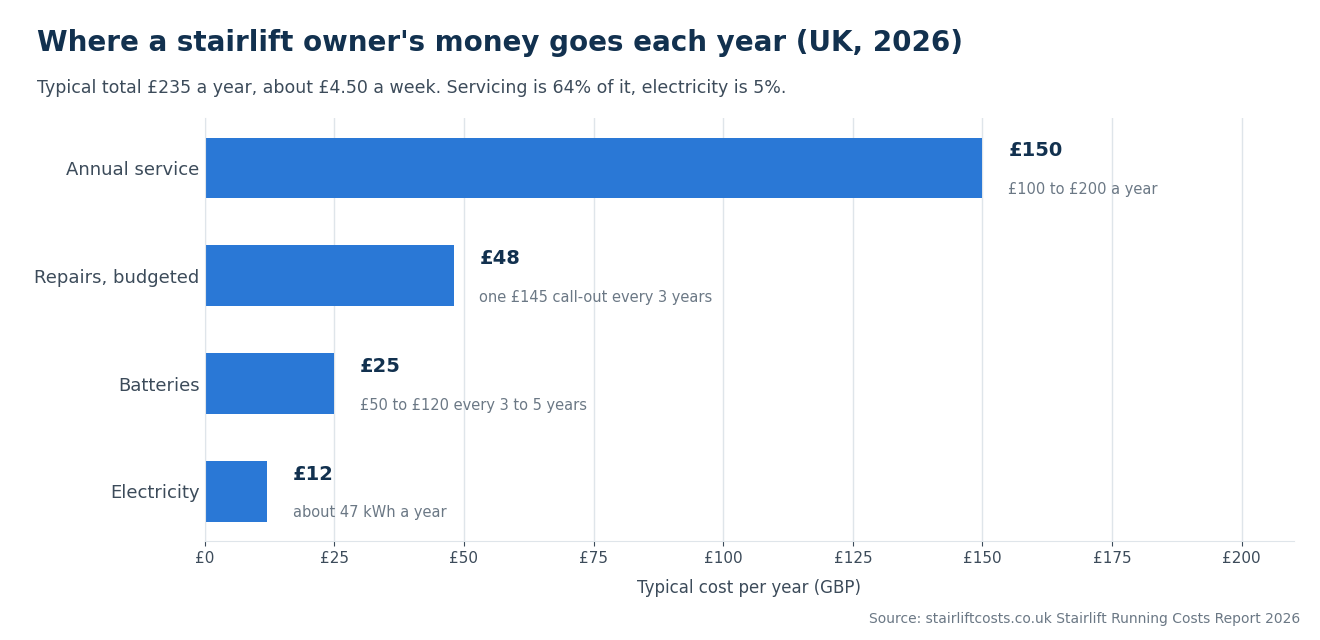
The proportions are the useful part. Most conversations about stairlift running costs are about electricity, and electricity is five per cent of the bill. What an owner actually spends is decided almost entirely by how the lift gets serviced.
Cover plan or pay as you go?
The manufacturer’s warranty runs out at 12 or 24 months. After that, owners either pay for each service and repair as it arrives, or take an annual cover plan bundling the service with breakdown cover, call-outs and, on better plans, parts and batteries. Cover plans run £150 to £300 a year.
| Route | Low | Typical | High |
|---|---|---|---|
| Pay as you go (service, batteries, repairs, electricity) | £118 | £235 | £357 |
| Cover plan (plan fee plus electricity) | £162 | £237 | £317 |
Last verified: August 2026
The typical figures land within £2 a year of each other, which is closer than anyone selling a cover plan tends to admit. What differs is the spread. Pay as you go swings from £118 in a quiet year to £357 in a bad one; the plan flattens that to a narrow band, and you pay for the flattening by giving up the quiet years.
That makes it a question about your finances rather than about the lift. If a surprise £300 bill would genuinely hurt, take the plan. If the lift is young, straight, lightly used and you have a contingency fund, don’t. Older lifts, heavy use, and curved or premium models with expensive parts all push towards the plan. Whichever way you go, get the call-out fee, the parts position and the attendance time written down before you sign.
The electricity question, settled
Published figures for stairlift electricity use are all over the place. The 180-to-365 kWh claim would put a stairlift at £47 to £95 a year at 2026 prices, roughly the same as a tumble dryer. The £10-to-£15 claim puts it below a television. Here is the model, in full, so you can see which is closer.
A stairlift draws power two ways. It trickle-charges its batteries around the clock so it still works in a power cut, and it draws motor current for the few seconds it is moving. Because the trickle charge runs 8,760 hours a year and the motor runs for perhaps four minutes a day, the standby draw dominates by a wide margin.
| Component | Assumption | kWh a year |
|---|---|---|
| Trickle charge and standby | 3W to 6W continuous, 8,760 hours | 26 to 53 |
| Travel | 8 journeys a day, 25 to 40 seconds each, motor drawing 240W to 400W | 5 to 13 |
| Total | Typical case: 4.5W standby, 8 journeys a day | 31 to 66, typically 47 |
At the Ofgem price cap unit rate of 26.11p per kWh for 1 July to 30 September 2026, 47 kWh comes to £12 a year, with a range of £8 to £17. The £10-to-£15 figure is about right. The 180-to-365 kWh figure is wrong by roughly five times, and looks like it was arrived at by treating the motor’s peak draw as though the lift ran continuously.
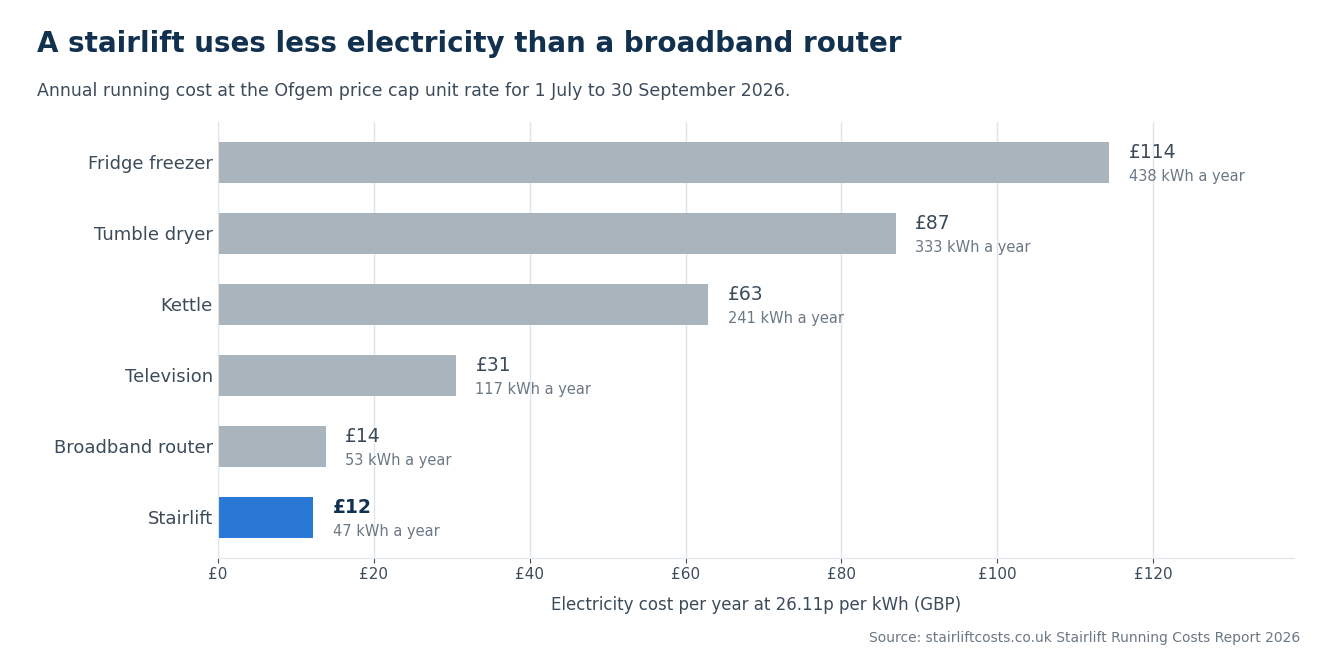
There is a practical consequence for anyone sitting through a sales visit. The gap between the most and least efficient stairlift on the UK market is a few pounds a year, so energy efficiency cannot sensibly decide which lift you buy. A salesperson who leads with it is leading with a number that does not matter.
Ten years of ownership, by route
Running costs compound. Over a ten-year life they add £2,350 to whatever the lift cost, plus £150 to £300 to take it off the stairs at the end. Set against the four realistic routes, using the 2026 bands from our pricing index, that reorders things.
| Route | Purchase or upfront | Running, 10 years | Removal | 10-year total |
|---|---|---|---|---|
| Buy a reconditioned straight lift | £1,500 | £2,350 | £225 | £4,075 |
| Buy a new straight lift | £2,750 | £2,350 | £225 | £5,325 |
| Buy a curved lift (single bend) | £6,000 | £2,350 | £225 | £8,575 |
| Rent a straight lift for 10 years | £500 | £9,000 | Included | £9,500 |
Last verified: August 2026
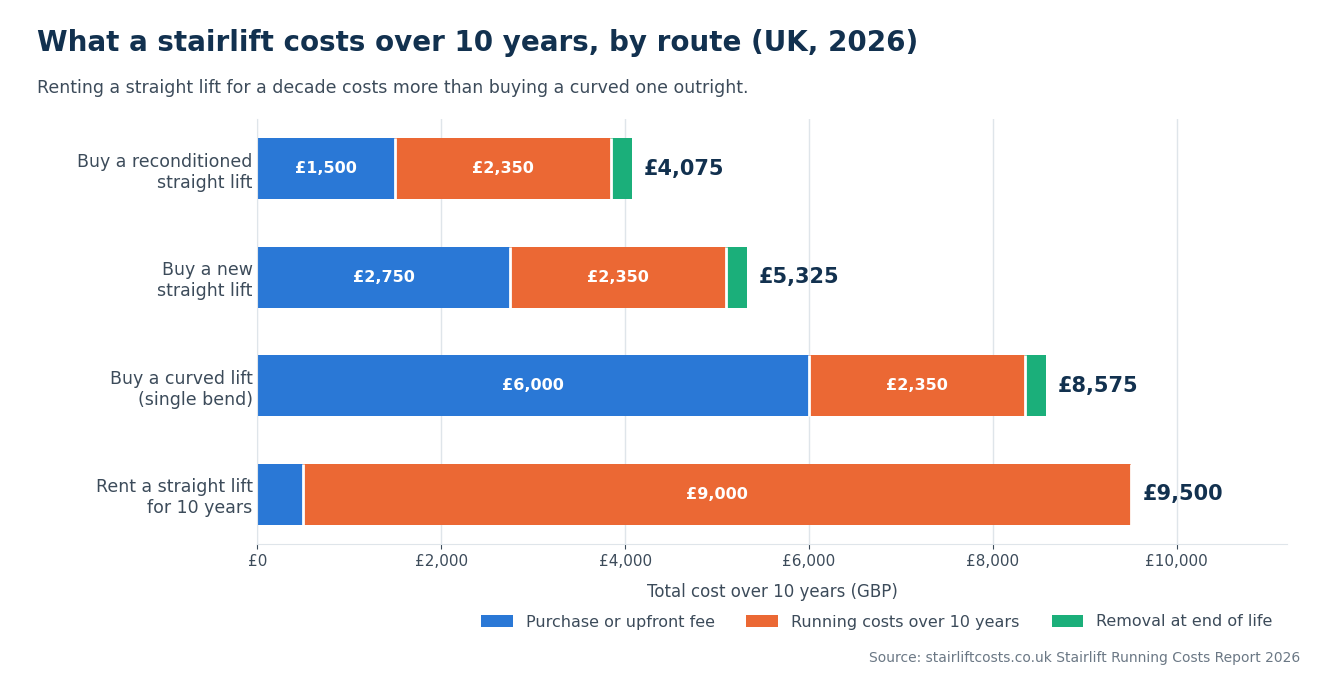
Look at the reconditioned row. The running costs and removal come to £2,575 against a purchase price of £1,500, so anyone comparing reconditioned quotes on the sticker price is haggling over the smaller half of the decision. Ten pounds a year on the service contract matters more than a hundred pounds off the lift.
The rental row is the one that surprises people. A decade of renting costs £925 more than buying a curved lift and £5,425 more than buying a reconditioned straight one, even though the rental fee covers servicing, breakdowns and removal.
When renting actually wins
Rental runs £50 to £100 a month with a £300 to £700 upfront fee. Compared on purchase price alone, it breaks even at 13 months against a reconditioned lift and 30 months against a new one. That comparison flatters buying, though, because the buyer is also carrying £19.58 a month of running costs the renter never sees.
| Rental compared with | Purchase price only | Including running costs |
|---|---|---|
| Reconditioned straight lift | 13 months | 18 months |
| New straight lift | 30 months | 41 months |
Eighteen months covers most recoveries from a stroke, a hip replacement or a bad fall, and most waits for a Disabled Facilities Grant decision. If the alternative is a new lift and the outlook is genuinely uncertain, renting holds up for around three and a half years. Past that, buying wins and the gap widens every month.
What actually reduces the bill
The largest saving available has nothing to do with running costs. If the user is chronically sick or disabled, the lift and its installation should be zero-rated for VAT, which takes 20% off the biggest single number in the whole exercise. Check who qualifies before you buy anything. A means-tested Disabled Facilities Grant can go further and cover the entire cost, up to £30,000 in England, £36,000 in Wales and £35,000 in Northern Ireland, with an equivalent scheme run by councils in Scotland.
After that, the decision with the most money attached is buying reconditioned for a straight staircase, which roughly halves the purchase price and changes the running costs not at all.
On the recurring costs themselves there is less room than people expect. The servicing route is a wash on price, so pick it on whether you can absorb a bad year rather than on the salesperson’s arithmetic. Batteries are the one line owners genuinely control: park the lift on its charging point at the top or bottom of the stairs instead of leaving it stranded halfway, and they last years longer. Electricity you can put out of your mind entirely, because it is £12 a year on anything sold in the UK.
Methodology and sources
All figures are UK averages for 2026, compiled August 2026. Service, battery, call-out, cover plan and removal costs come from our quarterly verified pricing index, which tracks published UK installer and independent engineer pricing. Purchase price bands are that index’s 2026 bands: reconditioned straight £1,000 to £2,000, new straight £2,000 to £3,500, curved single bend £5,000 to £7,000. Midpoints are used in the ten-year tables. Rental pricing of £50 to £100 a month plus a £300 to £700 upfront fee comes from published UK rental offers.
Note, 16 September 2026: this report uses the pricing index bands as they stood in August 2026. In September 2026 the index was revised to £1,500 to £3,500 for a new straight stairlift, £4,000 to £7,000 for a single-bend curved lift, and £40 to £80 a month plus a £300 to £500 installation fee for rental, to match the published prices we track. On the revised figures the ten-year totals come to about £5,075 for a new straight lift, £8,075 for a curved lift and £7,600 for renting a straight lift, so ten years of renting would cost slightly less than buying a curved lift rather than more. The reconditioned total is unchanged at £4,075. The tables and chart on this page will be rebuilt at the next quarterly refresh.
Electricity is modelled from stairlift charger and motor draw at the Ofgem default tariff cap unit rate of 26.11p per kWh (direct debit, including VAT) for 1 July to 30 September 2026. We have set the model out in full above instead of citing a figure, so it can be checked and re-run on a different tariff. Appliance comparison figures are standard UK annual consumption estimates costed at the same unit rate. Grant caps are from GOV.UK Disabled Facilities Grant guidance.
Multi-year costs are annualised by spreading them evenly across the years they cover, and labelled where that has been done. Stairlift Costs is an independent guide operated by Whito Ltd. We do not sell, install or service stairlifts.
Download the data: stairlift-running-costs-data-2026.csv (every figure on this page, free to reuse with attribution).
How to cite this report
Journalists, charities, councils and occupational therapists are welcome to reuse any figure or chart on this page. Please credit “Stairlift Costs Running Costs Report 2026” with a link back here. The charts can be republished unaltered under the same credit. If you need comment, a regional breakdown, or the electricity model run on a different tariff, get in touch via the contact page.
Frequently asked questions
How much does a stairlift cost to run per year?
About £235 a year in the UK in 2026, or roughly £4.50 a week. That covers the annual service at £150, a budgeted allowance of £48 for out-of-warranty repairs, £25 for batteries spread over their three to five year life, and £12 of electricity. Depending on the lift’s age and how it is serviced, the realistic range is £118 to £357.
How much electricity does a stairlift use?
About 47 kWh a year, costing £12 at the July 2026 price cap rate of 26.11p per kWh. Most of that is the trickle charge keeping the batteries ready for a power cut, not the motor. A stairlift uses less electricity than a broadband router left switched on.
Is a stairlift cover plan worth it?
On price it is a wash. A cover plan comes to about £237 a year all in, against £235 for paying as you go. What the plan buys is predictability rather than savings, so it makes sense if an unexpected £300 repair bill would be a problem, if the lift is older or heavily used, or if it is a curved or premium model with expensive parts.
How much does a stairlift cost over 10 years?
A reconditioned straight lift comes to about £4,075 over ten years, a new straight lift £5,325 and a curved lift £8,575, each including the purchase, ten years of running costs and removal at the end. Renting a straight lift for the same decade comes to about £9,500.
Is it cheaper to rent or buy a stairlift?
Renting is cheaper for short-term needs. Once running costs are counted, renting stays cheaper than buying a reconditioned straight lift for about 18 months, and cheaper than a new straight lift for about 41 months. Past those points buying wins, and the gap grows every month.
How much does a stairlift service cost in 2026?
A one-off annual service costs £100 to £200 in the UK in 2026. An annual cover plan bundling the service with breakdown cover and call-outs costs £150 to £300 a year. An out-of-warranty call-out on its own is £75 to £200 before parts.
How often do stairlift batteries need replacing?
Every three to five years. A replacement pair costs £50 to £120, which annualises to £10 to £40. Parking the lift on its charging point at the top or bottom of the stairs, instead of leaving it partway up, is the one thing owners can do to make a pair last longer.